The Lifespan of Your Water Heater: What You Need to Know
March 6, 2024
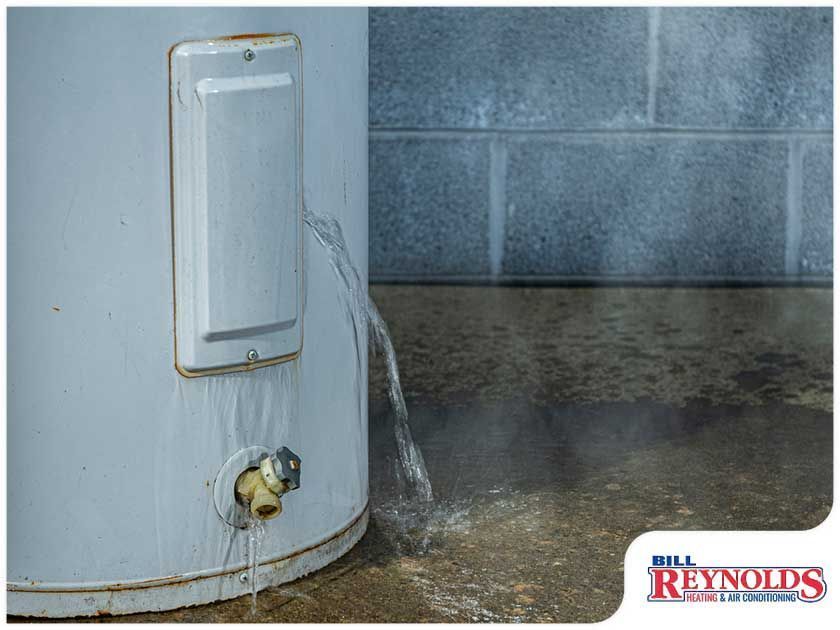
Water heater leaking water onto a concrete floor near a cinder block wall.

One of the most important appliances in your house is the water heater. A properly-functioning water heater is extremely vital in most modern homes. Water heaters usually come in two forms: one that has a storage tank to make heated water available at any given time, and another which is a tankless type that only heats water when you need it.


In any case, homeowners should know how long water heaters last. However, even with regular water heater maintenance, it can be difficult to determine when it’s time to have them replaced. It’s also important to note that the lifespan of your water
heater may depend on the type and quality of the unit. Bill Reynolds Heating & Air Conditioning, a top-quality provider of furnace installation services, shares a guide to the service lifespan of your water heater in this post. 


What Is the Average Lifespan of a Water Heater?

Many factors can impact the life expectancy of your water heater. Along with its age and level of maintenance, you also need to consider the quality of the water and the level of regular usage. While it’s possible for your water heater to outlast average estimates, there are certain expectations on how long your water heater can last. 


For instance, a traditional water heater has an average lifespan of eight to 12 years. Thanks to a process called electrolysis, an anode rod protects the interior lining by attracting all corrosive particles to itself inside the tank. However, once the rod has corroded to the point that it can no longer function, those particles will settle at the bottom of the water tank and eventually destroy the lining. When corrosion begins inside the tank, the water heater is beginning to near the end of its lifespan. 


A tankless water heater, meanwhile, can last up to 20 years. With regular heating service maintenance, it can even last longer than that. This is because these water heaters don’t have to work continuously to maintain a supply of hot water. However, since they don’t use anode rods, tankless water heaters can suffer from corrosion over time. 


If you don’t know what type of water heater you currently have, there are other ways to determine its age. One of these is checking the serial number of your appliance. The serial number, which is typically located on the upper portion of the water heater, consists of a letter followed by a set of numbers, which establishes the date it was manufactured. The letter usually stands for the month: “A” for January, “B” for February, and so on. When you see a serial number that starts with “A12,” this means your appliance was manufactured in January 2012. While this method can be applied to most water heaters, you can also reach out to the manufacturer just to be sure. 


What Are the Signs You Need to Replace Your Water Heater?

To ensure your water heater continues functioning effectively, it’s best to have an expert plumbing and air conditioning repair technician perform professional inspections. They’ll examine your unit and perform the necessary repairs. Without regular maintenance, your water heater may suffer from wear and tear that causes premature deterioration.


Even if your water heater has a few years left in it, you may need to consider replacing your unit if you notice any of the following signs:

  • Inconsistent temperatures.  If your heater is on but you’re still getting cold water, your unit may not be as functional as it once was. Before you call a professional, closely examine the connections to and from the water heater. Check the insulated pipes and the temperature settings as well. If you have a gas-heated unit, check if the pilot light is still lit. Avoid striking a match if you notice a very strong gas smell. 

  • Rusty, brownish water.  Tinted, rusty hot water that’s either brown or yellow in color can mean two things: your water heater is rusting on the inside, or your home’s pipes are rusty. It’s also important to determine whether the discoloration appears while the cold water is running. If it doesn’t, the corrosion problem probably originates from inside the water heater instead of the pipes. At any rate, be sure to call a professional heating service technician.


  • Water that has a strange odor.  The hot water coming out of the heater can smell off or taste weird. This means that something is contaminating the contents of the water tank. It could be a piece of metal that’s been absorbed into the water, or bacteria accumulating inside the tank. Before you start panicking, try cleaning your water heater tank. If this doesn’t solve the problem, it’s time to call a plumber. 


  • Pooling water or leaks.  Water pooling around your water heater is never a good sign. As such, you should immediately call a heating or air conditioning repair company to have it checked out. If you notice pooling water around the base of your tank, be sure to check if the leak is coming from a fitting or valve that needs to be tightened or replaced. If the leak comes from the tank itself, there may be interior cracks.

  • Banging or rumbling noises.  Most manufacturers recommend flushing a traditional water heater annually, but only a few homeowners follow this advice. If you don’t, sediment can build up in your water heater as time goes by. As you heat it over and over again, the sediment can harden and eventually start shifting around. This causes rumbling or gurgling noises. Make certain not to overlook these banging noises, as this problem can lead to overworked water heaters, leaks, internal damage and more.


  • A decrease in hot water.  In addition to rumbling noises, the buildup of sediment can decrease the space inside the tank over time. As a result, you may notice that there’s less hot water than there used to be. If the hot water runs out more quickly than before, you may need to drain or clean your tank. Waiting too long to clean it can compromise the overall health and efficiency of your water heater. 

You might also like
By Chris Geer • November 1, 2026
Most people don't think about their furnace or air conditioner until something goes wrong — and it always seems to go wrong at the worst possible time. The AC quits on the hottest weekend of the summer. The furnace stops working on the coldest night of the year. It's not bad luck; it's usually a small issue that had been building for months, waiting for the moment your system was working hardest. That's the exact problem our Service Agreement Program is built to solve. From Reacting to Staying Ahead The idea behind the program is simple: instead of waiting for a breakdown and then scrambling to get a technician out, you get ahead of it. Regular inspections catch the small stuff — a weak capacitor, a dirty burner, a refrigerant level that's drifted off — before it turns into a no-heat or no-cool emergency. As a member of the program, your heating and cooling systems each get a full diagnostic and safety inspection, including: ● Carbon monoxide testing and combustion gas analysis on your furnace ● Burner cleaning, ignition checks, and heat exchanger inspection ● Capacitor, refrigerant, and coil checks on your air conditioner ● Thermostat verification, plus a check of your humidifier and air cleaner/filter system ● A safety inspection of your hot water heater That last point matters more than people realize: most furnace and AC manufacturers require annual maintenance to keep the equipment's warranty valid. Skipping it doesn't just risk a breakdown — it can quietly void the coverage you're counting on if something does go wrong. What You Get Beyond the Inspections Membership isn't just about the two visits a year. It also means: ● 15% off parts and labor on any repairs your system needs ● 15% off filters, air cleaner media, and humidifier water panels ● Priority scheduling , so members move to the front of the line when everyone else's system decides to act up at the same time — usually the first real cold snap or heat wave of the season ● 24-hour service, 7 days a week , so help is available whenever you actually need it Individually, those are nice perks. Together, they add up to a system that's serviced regularly, repaired at a discount when it needs it, and prioritized ahead of the crowd — which is a very different experience than calling around for an emergency appointment in the middle of a heat wave. Why This Fits How We Operate Bill Reynolds Heating & Air Conditioning has served Eastlake and the rest of Lake County since 1958, and our approach has always been service over sales — three generations running. The Service Agreement Program is really just that philosophy built into a plan: catch problems early, treat members fairly, and be there when it counts, rather than showing up only when there's a sale to make. As a Carrier Factory Authorized Dealer, our technicians are trained to the standards these inspections call for, whether your system is a Carrier or another brand entirely. Stop Waiting for the Breakdown If your HVAC system has ever caught you off guard, the Service Agreement Program is how you make sure it doesn't happen again. Two seasonal inspections, real discounts, and priority when you need it — it's a small investment that heads off a much bigger one. Bill Reynolds Heating & Air Conditioning 1374 E 345th St., Eastlake, OH �� (440) 946-7863 �� Learn more about the Service Agreement Program  Serving Eastlake and all of Lake County, Ohio — with over 65 years of service over sales.
By Chris Geer • October 19, 2026
If you've been researching heating and cooling companies in Lake County, you've probably noticed a badge that keeps popping up: Carrier Factory Authorized Dealer . It sounds impressive, but what does it actually mean for the person sitting at home with a furnace that won't kick on or an air conditioner that's on its last leg? At Bill Reynolds Heating & Air Conditioning, we've held this designation for years, and it's not just a logo on our trucks. It's a standard we work to meet every single day — and it directly affects the kind of service you get when you call us. It's Not a Badge You Just Buy A lot of homeowners assume "authorized dealer" is a marketing term any HVAC company can slap on their website. It isn't. Carrier only extends this status to contractors who meet a specific set of requirements, and it can be revoked if those standards slip. To become — and remain — a Factory Authorized Dealer, a company has to: ● Complete extensive factory training on the installation, maintenance, and repair of Carrier equipment ● Hold all required state and local licenses, along with proper insurance ● Maintain consistently high customer satisfaction scores ● Pass ongoing evaluations of technical skill, business practices, and customer service That last point is the one people miss. This isn't a one-time certificate earned years ago and forgotten. Carrier continues to check in on authorized dealers to make sure the training and the service quality are still there. What It Actually Means When You Call Us Here's where it gets practical. Because our technicians go through Carrier's factory training, they're not guessing at the best solution for your home — they're trained to evaluate your specific setup and recommend equipment that actually fits your house, your budget, and your comfort needs, rather than a one-size-fits-all fix. It also means added protection for you. Carrier backs Factory Authorized Dealer installations with a 100% Satisfaction Guarantee : if something isn't right within the first year, the dealer will make it right — up to removing the equipment and refunding your money, subject to the program's terms. That's a level of accountability you don't get from just any installer. And despite the name, this training doesn't limit us to only working on Carrier equipment. Our technicians are equipped to service and repair most major HVAC brands, so whether your current system is a Carrier or something else entirely, you're getting the same trained, evaluated, factory-backed expertise either way. Why This Matters More Coming From Us Bill Reynolds Heating & Air Conditioning has been serving Eastlake and the surrounding Lake County communities since 1958. Our founder built this company on a simple idea — service over sales — and that's still how we operate three generations later. The Factory Authorized Dealer status isn't a sales tool for us; it's a reflection of a philosophy we already had: do the training, do the work right, and stand behind it. When you're comparing HVAC companies, that badge is worth asking about. It's a quick way to tell whether a company has invested in ongoing training and whether a major manufacturer is willing to put its name — and its guarantee — behind their installations. Have Questions About Your System? Whether you need a repair, a new installation, or just want an honest opinion on your current furnace or AC, our Carrier Factory Authorized team is here to help — and we'll service any make or model, not just Carrier. Bill Reynolds Heating & Air Conditioning 1374 E 345th St., Eastlake, OH �� (440) 946-7863 �� billreynoldsheating.com Serving Eastlake and all of Lake County, Ohio — with over 65 years of service over sales.
By Chris Geer • October 14, 2026
Quick answer: If your furnace is more than about 15 years old and a repair costs a large share of a new unit, replacement is often the better value. A common rule of thumb is to multiply the repair cost by the unit's age. If the result is above roughly $5,000, replacing the furnace is usually worth a serious look. Your furnace has just failed on the first cold night of the season. The technician suggests a repair, but you're wondering whether you're throwing good money after bad. This is one of the most common decisions homeowners face, and the answer depends on a few specific factors. Five Factors to Weigh 1. The age of the system. Furnaces often last around 15 to 20 years with regular maintenance. An older unit may still run, but it's closer to the end of its useful life, and each repair brings a higher chance of another one soon. 2. Repair history. One repair in a decade is normal. Repeated calls for different parts, or the same part failing again, are a signal that the system is wearing out. 3. Repair cost compared to replacement cost. Use the rule of thumb above. A $400 repair on a 10-year-old furnace is usually a reasonable fix. A $1,500 repair on a 20-year-old furnace deserves a second look at replacement. 4. Energy efficiency. Older furnaces typically convert less of their fuel into heat than newer models. A high-efficiency replacement can lower your heating costs, though actual savings depend on your home, your usage, and your current system. 5. Safety. A cracked heat exchanger, a failing draft, or any sign of carbon monoxide is not a decision to delay. Shut the system down and call a technician right away, whatever the age of the unit. Signs It May Be Time to Replace The furnace is short-cycling, running in brief bursts, or struggling to keep rooms at temperature Your energy bills keep climbing even though your usage hasn't changed The system is noisier than it used to be, with banging, rattling, or squealing You're calling for repairs every season Parts are hard to find because the model is discontinued When Repair Still Makes Sense Repair is often the right call when the furnace is relatively new, the problem is isolated (a failed igniter or a worn blower motor, for example), and the rest of the system is in good shape. A repair on a newer unit can extend its life well beyond the cost of the fix. Timing Your Decision Replacing a furnace in the middle of a cold snap leaves little room to compare options. If you suspect your system is near the end of its life, a fall inspection gives you time to plan. Bill Reynolds currently offers $150 off a new furnace, boiler, or heat pump. The offer expires December 31, 2026, and cannot be combined with other offers. How We Approach This Decision We'd rather explain what's happening with your system than push you toward equipment you don't need. A good technician will show you the problem, walk you through repair and replacement options, and help you choose what fits your home and budget. That's been our approach in Lake County since 1958. Frequently Asked Questions How long should a furnace last? With regular maintenance, many furnaces last about 15 to 20 years. Usage, installation quality, and local conditions all affect that range. Is it worth repairing a 20-year-old furnace? Sometimes, if the repair is minor and the rest of the system is sound. If the repair is expensive, or the unit has needed frequent fixes, replacement is often the better long-term choice. Does a new furnace always save money on energy? Newer high-efficiency units usually use less fuel than older ones, but the actual savings depend on your home, your habits, and the size and installation of the new system. What should I do if my furnace smells like gas or I suspect carbon monoxide? Leave the home, call your gas utility or emergency services, and do not re-enter until it's cleared. Don't wait for a scheduled repair. Talk With Our Team  Not sure which way to go? Call Bill Reynolds Heating & Air Conditioning at (440) 946-7863 for an honest look at your system. Bill Reynolds Heating & Air Conditioning 1374 E 345th St., Eastlake, OH www.billreynoldsheating.com

Book a Service Today